
In the high-end domestic service sector, technical excellence—knowing how to set a table à la russe, manage a wine cellar, or care for high-fashion garments—is taken for granted. However, what transforms efficient management into an exceptional life experience is not what staff do, but how they make the family feel. In this scenario, emotional intelligence emerges as the most critical and scarce competency.
Filipino-origin staff have earned a global reputation not just for their diligence, but for an almost intuitive ability to connect with their employers’ emotional needs. This form of empathy, deeply rooted in their culture, translates into service that is both invisible and protective. In a world where luxury is increasingly personal, the ability to read between the lines and anticipate the mood of a household is the most valuable asset a professional can offer.
The Psychology of Service: Anticipation vs. Reaction
Emotional intelligence in the home manifests primarily through anticipation. An employee with high empathic capacity does not wait for an order; they detect the need before the employer is even conscious of it.
The Art of Invisible Presence
One of the most complex skills to master is the ability to be present without intruding. Filipino-origin staff master this balance with expertise. They understand when the family requires meticulous attention and when they need space and silence. This “reading of the environment” allows the home to flow without friction, creating an atmosphere of calm essential for the mental wellbeing of those living under high professional or social pressure.
Non-Verbal Communication and Need Detection
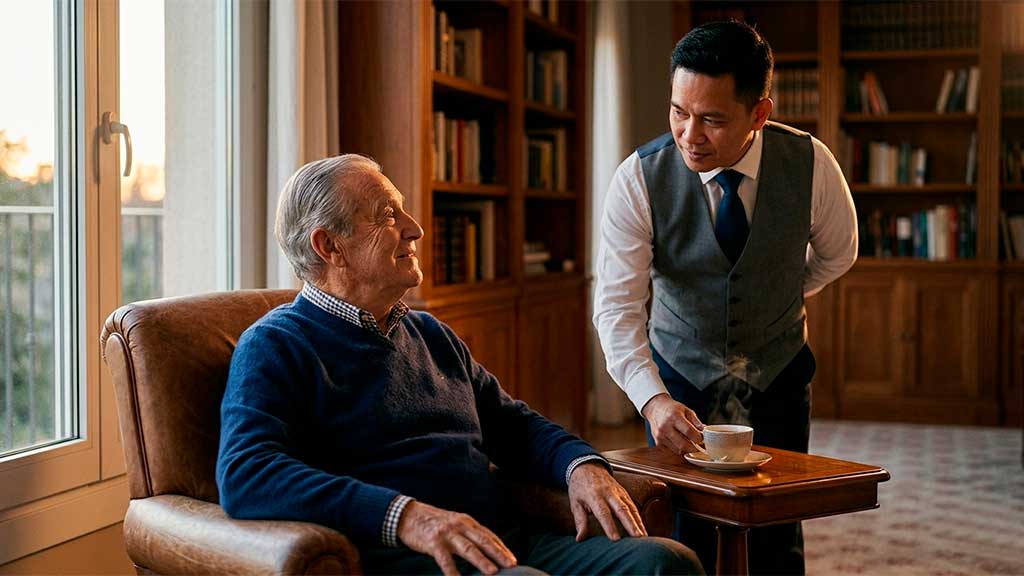
Much of the management of a luxury residence happens on a non-verbal level. A gesture of fatigue, a look of concern, or a change in daily routine are signals that staff trained by Luxury Philippines know how to interpret. Empathy allows them to adjust the household’s pace: preparing a relaxing tea without being asked, silencing rest areas, or handling calls with tact, acting as an emotional filter that protects the employer’s peace.
Resilience and Optimism as Operational Pillars
Emotional intelligence also includes managing one’s own emotions under pressure. In complex events or domestic crises, the staff’s attitude determines the household’s emotional temperature.
Crisis Management with Calm and Discretion
In stressful situations—such as a gala dinner with unforeseen issues or a medical emergency—Filipino staff stand out for their resilience. They maintain impeccable composure that prevents chaos from spreading. Their approach is not to seek blame, but to find immediate solutions with a positive attitude. This optimism is not superficial; it is an operational tool that lowers cortisol levels in the domestic environment.
Creating an Environment of Trust and Security
Loyalty is a derivative of emotional intelligence. When an employee demonstrates genuine empathy for the family, a bond of trust is created that goes beyond the contractual. The employer feels their home is in the hands of someone who truly cares for their wellbeing and that of their loved ones. This psychological safety is, ultimately, what defines true comfort in the 21st century.
Caring for the Most Vulnerable: Children and the Elderly
It is in the care of the youngest or oldest members of the family where empathy shines brightest. Filipino staff are celebrated for their natural warmth and patience. Their ability to establish healthy affective connections provides invaluable emotional stability, often becoming fundamental support figures who understand and respect the parents’ values and boundaries.
Impact on Wellbeing and Service Longevity
A home managed with emotional intelligence has a direct impact on the health and longevity of the relationship between employer and employee.
Reducing Employer Stress
Delegating logistical tasks is useful, but delegating the “mental load” is transformative. Knowing the staff has the emotional maturity to resolve internal conflicts or manage suppliers with diplomacy frees the employer from daily micro-tensions. The result is a house that functions as a refuge, not as another source of management.
The Culture of Mutual Respect and Dignity
Emotional intelligence is bidirectional. Filipino-origin staff, treated with the respect and dignity their high qualification deserves, respond with an emotional commitment that money alone cannot buy. This harmony creates long-lasting working relationships, avoiding the staff turnover that so disrupts the stability of a grand residence.
Conclusion
Emotional intelligence is not a “soft skill”; it is the engine of excellence in luxury domestic service. Empathy, resilience, and the ability to anticipate are what turn an employee into a strategic asset for the family.
At Luxury Philippines Domestic Service, we do not only evaluate our candidates’ technical skills; we prioritize their emotional maturity and their vocation for care. We understand that your house is not just a building, but an emotional ecosystem that deserves to be guarded by expert hands and empathic hearts. Because the greatest luxury of all is feeling understood and cared for in the intimacy of your own home.