
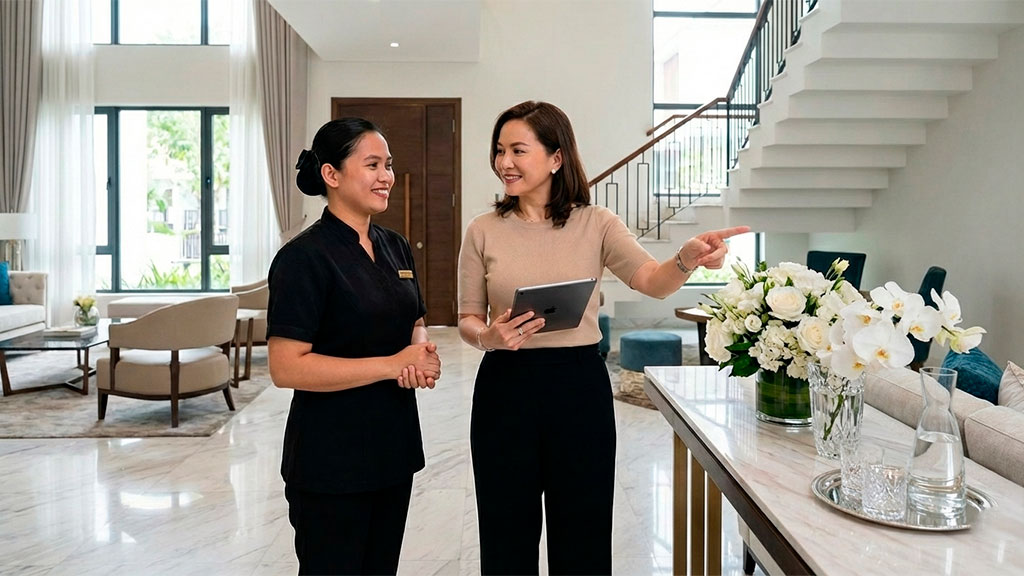
Finding the perfect candidate—that Filipino professional whose ethics, skills, and temperament align with your home’s values—is a significant achievement. However, the process does not end with the signing of the contract. In fact, the most critical period for ensuring a harmonious and lasting working relationship begins the moment the employee crosses the threshold of your residence for the first time. This process is known as onboarding or integration, and in the luxury sector, it must be as meticulous and refined as the selection process itself.
Successful onboarding is the bridge between a promising hire and long-term excellence in service. It is not simply about showing where the cleaning products are or how the kitchen works; it is about conveying the philosophy of your home, your subtlest preferences, and establishing a foundation of mutual trust. For Filipino staff, who possess a natural inclination toward care and loyalty (Malasakit), a structured integration is the catalyst that allows them to deploy their full potential from day one.
The preparation phase: laying the foundation for clarity
Before the new team member begins their duties, it is essential to have prepared the ground. Uncertainty is the greatest enemy of efficiency. An organized start communicates professionalism and respect for the employee’s time and labor.
The house manual: your personalized roadmap
The most powerful tool for frictionless integration is the House Manual. This document should be the operational bible of your residence. It does not need to be excessively complex, but it must be exhaustive regarding the details that make a difference. It should include everything from security protocols and alarm handling to the specific preferences of each family member: How is the coffee preferred? Which textiles require special care? What are the areas of absolute privacy? By providing this information in writing, you eliminate guesswork and allow Filipino staff to execute their tasks with their characteristic precision, reducing the stress of initial learning.
Defining expectations and communication protocols
Clarity in roles is vital. During the first few days, it is fundamental to dedicate time to defining not only what should be done, but how and when. This includes establishing preferred communication channels (whether it is a brief daily meeting, a management app, or a logbook). For Filipino staff, respect for hierarchy is fundamental; knowing exactly whom to turn to in case of doubt or emergency provides them with the security needed to act with autonomy and efficacy.
Executing the onboarding: from adaptation to autonomy
Once the staff is in the home, the integration process should be gradual but constant. It is a period of mutual observation where the dynamics of coexistence are adjusted.
Initial shadowing and “on-the-ground” training
Even the most experienced professional needs an adaptation period to a new environment. At Luxury Philippines Domestic Service, we recommend closer accompaniment during the first week. Personally showing the operation of home technology or explaining the logistics of supplies allows the employee to absorb the culture of the house firsthand. This training is not just technical; it is an opportunity for the staff to observe the family’s rhythm and learn to anticipate their needs—one of the greatest virtues of the personnel we select.
Structured Feedback: The 30 and 90-Day Milestones
Communication must not be one-way. Establishing moments for structured feedback is crucial. A brief chat at the end of the first week, and more formal evaluations at 30 and 90 days, allow for the correction of small misalignments before they become habits. Asking the employee “How are you feeling?”, “Is there anything you need to do your job better?” or “What has been the most difficult thing to learn?” fosters a climate of transparency. For the Filipino worker, knowing that their well-being and opinion matter reinforces their emotional commitment to the family.
The human dimension: the trust factor
In a luxury residence, domestic staff enter the sanctuary of family intimacy. Therefore, integration must address the emotional facet to build a relationship based on loyalty.
Fostering ‘malasakit’ from day one
As we have explored in other articles, Malasakit is that genuine concern for the employer’s well-being. This value flourishes when the employee feels valued and respected. A welcoming gesture, a dignified rest space, and the recognition of their initial efforts are investments that return in the form of unwavering dedication. When Filipino staff feel they are part of a team and that their work truly contributes to the balance of the home, their service stops being a task and becomes a personal mission of care.
Conclusion
Luxury onboarding is not a single-day event but a strategic process that ensures the investment made in personnel selection pays off. A well-executed integration minimizes turnover, reduces operational errors, and, most importantly, creates an atmosphere of serenity and trust from the very beginning.
At Luxury Philippines Domestic Service, our commitment does not end when the candidate arrives at your home. We accompany our clients through this integration process, advising them on the best practices so that the transition is an absolute success. We understand that well-integrated staff are the pillar of a happy and efficient home. With the right approach, those first few days will become the start of many years of collaboration, loyalty, and excellence in your domestic service.