
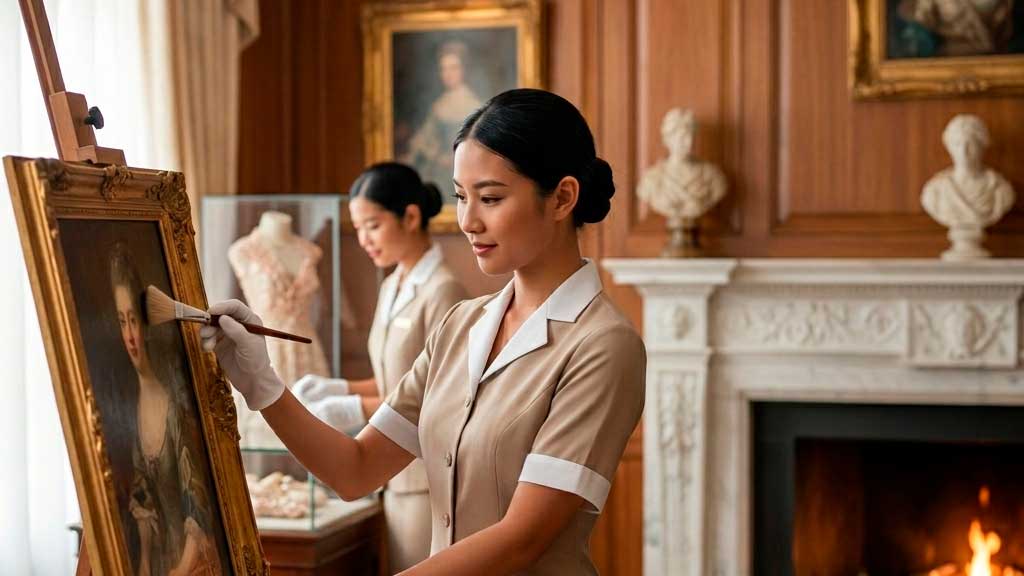
In a luxury residence, the heritage value lies not only in the architecture but in the collections that inhabit its spaces. Centuries-old oil paintings, marble sculptures, period furniture, and haute couture pieces that are true textile gems form a delicate ecosystem that requires much more than superficial cleaning. The maintenance of these objects demands a level of rigor, patience, and technical knowledge that only expert hands can provide.
Filipino domestic staff have earned an unmatched international reputation in this field. Their approach to work, characterized by meticulous attention to detail and profound respect for the property of others, makes them the ideal custodians of the most valuable collections. In this article, we will explore how the skill and training of Filipino staff ensure that a family’s artistic and material legacy remains impeccable over time.
Art heritage care: between science and delicacy
Works of art are living organisms that react to their environment. A sudden change in humidity or the use of an inadequate chemical product can cause irreversible damage to a piece valued at millions of euros.
Environmental control and technical surface cleaning
Qualified Filipino staff understand that the first step of conservation is prevention. They are experts in monitoring light and humidity levels, ensuring that curtains or UV filtration systems are used correctly to protect painting pigments. When approaching cleaning, their methodology is one of “minimum contact.” They use specific tools, such as sable hair brushes for gilded frames or museum-grade microfibers, always avoiding abrasion. Their natural patience allows them to dedicate hours to a single piece, ensuring every corner is dust-free without compromising the integrity of the work.
Management of antiques and noble materials
Marble, bronze, and noble woods with marquetry inlays require differentiated protocols. Filipino staff stand out for their ability to strictly follow conservation technical sheets. They know that hand-waxed wood cannot be touched with multi-purpose commercial cleaners and that bronze requires a specific patina to avoid oxidation. This operational discipline transforms daily cleaning into an act of museum preservation, maintaining the original splendor of antiques as if time had not passed.
Haute couture and luxury textiles: wardrobe mastery
If there is one place where the manual dexterity of Filipino professionals truly shines, it is in the care of a high-end wardrobe. Haute Couture pieces are not just clothing; they are complex structures of silk, lace, beadwork, and experimental fabrics.
The art of professional pressing and steaming
Hand-stitching and needlework skills, along with mastery of artisanal pressing, are deeply rooted in Filipino service culture. They understand the difference between dry heat and steam and know which fabrics should never touch an iron directly. Their ability to handle a hand-sewn beaded garment, ensuring every bead stays in place while the garment regains its perfect drape, is an art form in itself. This expert care prolongs the life of the most exclusive fashion collections, allowing garments to look brand new every time they are worn.
Organization and preservation of accessories and footwear
A luxury walk-in closet houses exotic leathers, delicate silks, and artisanal footwear that require specific lasts and constant hydration levels. Filipino staff apply a rotation and storage system that prevents the deformation of collection bags and the appearance of creases in leathers. Their meticulousness ensures that every accessory is always ready to be used, perfectly cataloged, and protected from dust and excessive light, maintaining its resale value and impeccable aesthetics.
The ethics of care: respect, silence, and responsibility
Beyond technique, what defines the service of Filipino professionals is the philosophy with which they approach the care of valuables.
Discretion as a rule in handling pieces
Handling high-value objects requires an intrinsic serenity that Filipino staff possess. They work with a calm that minimizes the risk of accidents. Furthermore, their deep sense of responsibility leads them to report immediately any minor alteration they detect—a small crack, a damp spot, or a loose thread—allowing for early intervention by professional restorers before the damage escalates.
Continuous training in new conservation techniques
At Luxury Philippines Domestic Service, we encourage our staff to stay up to date with conservation best practices. We understand that the luxury market evolves and that modern homes incorporate new materials and technologies. Filipino staff, with their mindset of continuous learning, adapt to new demands, ensuring that the service is always at the level of our clients’ investments.
Conclusion
The conservation of valuables is not a cleaning task; it is a labor of custodianship. It requires hands that understand fragility, eyes that detect imperfection, and an ethic that values family heritage as one’s own. Filipino staff embody these qualities with an elegance and effectiveness that exceed the expectations of the most demanding owner.
Having Filipino professionals for the care of your art, antiques, and haute couture is the best guarantee that your material legacy will receive the treatment it deserves. At Luxury Philippines Domestic Service, we take pride in connecting families with these expert custodians, ensuring that the beauty and value of their collections endure for generations under the most exquisite care in the world.