
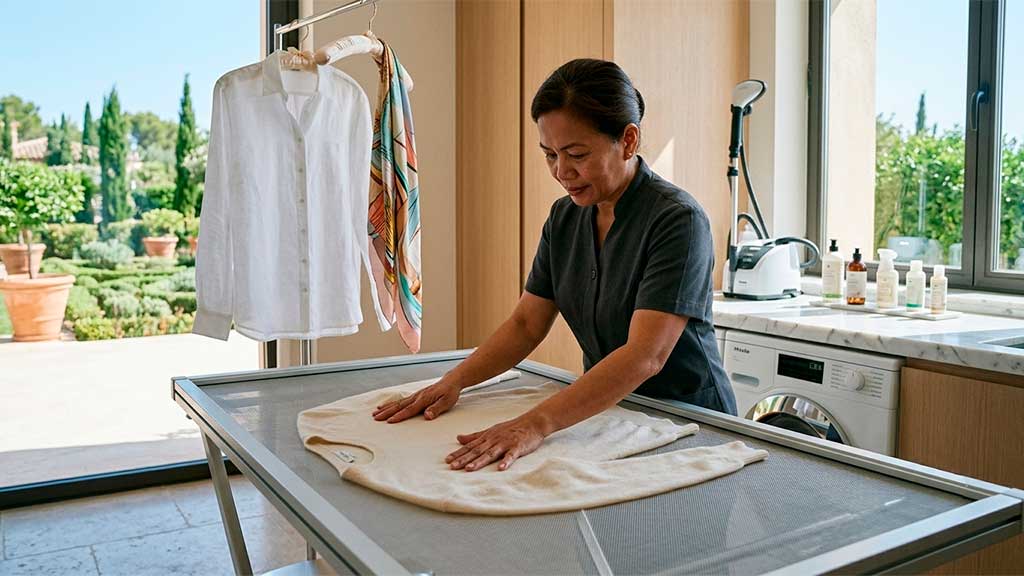
The summer wardrobe of high-net-worth families is a statement of understated elegance. Fabrics such as Italian linen, natural mulberry silk, and ultralight blends of cashmere and silk dominate the season’s attire. However, these organic and noble fibers, which offer unparalleled freshness against high temperatures, are also the most vulnerable. Exposure to the sun, the salinity of coastal environments, the use of sunscreens, and the friction caused by travel can irreversibly damage a haute couture piece in a matter of days.
In the realm of elite domestic service, the maintenance of this wardrobe is never entrusted to automated processes or conventional dry cleaners that utilize aggressive chemicals. Domestic staff of Filipino origin, widely recognized for their meticulousness, respect for detail, and solid technical training, apply authentic museum-level conservation protocols within the home. For them, garment care is not a mechanical chore, but an artisanal discipline aimed at preserving the texture, color, and original drape of every single piece.
The Science of Summer Fibers: Technical Diagnosis and Classification
Before a single drop of water or steam touches a high-end garment, Filipino staff activate a rigorous inspection protocol. A deep understanding of the physics of each fabric is what prevents the most common mistakes in domestic care, such as shrinkage, loss of sheen, or the breakage of structural fibers.
Linen: Mastering the Noble Wrinkle and Preventing Abrasive Wear
Linen is the undisputed king of summer, but its molecular rigidity causes it to crease easily, and its fibers can break if folded repeatedly in the exact same spot. The Filipino protocol strictly prohibits the use of conventional washing machines for high-tailoring linen shirts and dresses.
Instead, hand washing or delicate cycles with cold water and neutral, plant-based soaps are chosen. Upon completion, the garment is never wrung out; it is gently pressed between white cotton towels to absorb excess moisture. The secret to its ironing lies in residual humidity: linen is worked with a high-pressure iron while the fabric still retains about 10% moisture, achieving a flawless smoothness without scorching the surface or stripping away that natural, sophisticated drape that characterizes the “noble wrinkle.”
Silk: Preserving Natural Luster and Removing Biological Stains
Silk is a protein fiber highly sensitive to heat, direct sunlight, and bodily fluids. Sweat and oils from sunscreens are silk’s greatest enemies during the summer, as they can set into and weaken the fabric. Elite Filipino professionals treat stains immediately using capillary absorption techniques, avoiding rubbing, which would break the delicate silk filaments and create dull patches.
Washing is carried out exclusively with lukewarm water and pH-neutral detergents specifically formulated for proteins. Drying takes place indoors, in rooms with cross-ventilation but completely shielded from UV rays, which yellow silk and make it brittle. Ironing is always done inside out, placing a cotton batiste cloth in between and setting the ironing station to its minimum temperature.
Advanced Laundry Logistics: Selective Thermal and Chemical Processes
Maintaining a premium wardrobe during the hot months requires a laundry infrastructure that operates with the precision of a laboratory. Filipino staff stand out for their ability to manage these technical environments with absolute safety.
Summer Cashmere: Technical Airing, Light Washing, and Pilling Control
Although associated with winter, fine-gauge (ultralight) cashmere is highly common during cool summer nights aboard a yacht or on seaside terraces. As a fabric that absorbs environmental moisture, frequent washing is not recommended. Filipino professionals master the art of “technical airing”: they expose garments in ventilated, shaded areas to eliminate odors without wearing out the wool.
When washing is unavoidable, it is performed by submerging the garment inside out in cold water with an ultra-mild organic shampoo. Drying is done strictly flat on textile mesh surfaces to prevent the weight of the water from deforming the shoulders or the hem of the garment. Additionally, manual brushing is performed with specific wooden combs to eliminate loose micro-fibers (pills) before they turn into visible fuzzballs.
Managing External Agents: Sunscreens, Chlorine, and Marine Salinity
Summer exposes clothing to complex chemical substances. Sunscreen leaves greasy residues and mineral filters (such as titanium dioxide) that react with the iron in water, creating difficult-to-remove yellowish stains. Filipino staff apply a preventive protocol: they check collars and cuffs immediately after each use.
They utilize mild degreasing solutions made from natural enzymes that dissolve oils without damaging the organic dyes of the fabric. Likewise, garments exposed to sea salt or pool chlorine are immediately rinsed in demineralized fresh water to prevent salt crystals from acting as microscopic blades on linen or Egyptian cotton fibers.
Vertical Storage Systems and Summer Hygrometric Control
Garment care does not end after ironing; storage within the dressing areas of luxury residences is just as critical. High summer temperatures combined with coastal humidity can foster the growth of mold or attract textile insects.
Staff of Filipino origin ensure that each garment is stored under optimal conditions: silk and linen are hung on padded silk or wide-contoured wooden hangers to avoid deforming the seams, while cashmere knitwear is stored folded with tissue paper in ventilated drawers. Furthermore, they implement humidity control systems inside the closets and use natural lavender sachets or cedar wood, avoiding chemical products that could alter the personal perfumes of the homeowners.
The Value of Specialization in Luxury Maintenance
The difference between conventional domestic service and the staff selected by Luxury Philippines Domestic Service lies in the level of responsibility and respect toward the client’s heritage. A haute couture garment is not simply clothing; it is an investment and a collector’s piece.
Filipino staff assume this care with an innate devotion. Their meticulousness ensures that the homeowner never has to worry about the integrity of their summer looks, whether for a business meeting under the Marbella sun or a gala dinner in Ibiza. The pieces maintain their freshness, structure, and seamless silky touch throughout the entire season, prolonging the lifespan of the most exclusive wardrobe.
Conclusion
Caring for noble fabrics during the summer season represents the pinnacle of specialized domestic management. Thanks to strict protocols and the artisanal patience of Filipino staff, the fragility of linen, silk, and cashmere ceases to be a concern for homeowners. The true luxury of summer is wearing flawless, fresh, and radiant garments with the absolute peace of mind that an elite professional is watching over the conservation of every single seam.