
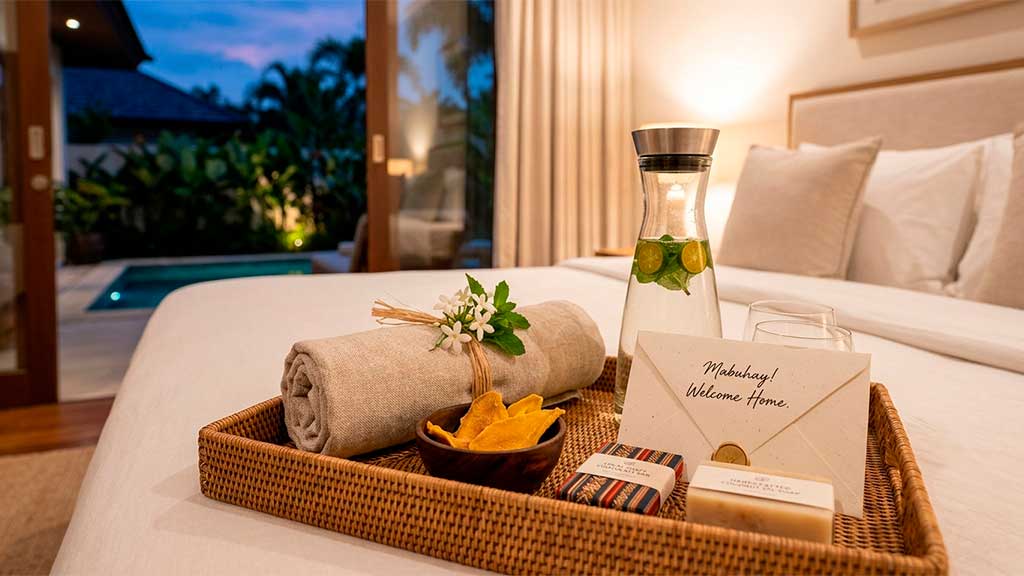
In contemporary hosting culture, the concept of the welcome kit has evolved from an exclusive luxury hotel perk into a flourishing residential practice. Opening the doors of your home to family or friends arriving from a trip is an art that goes far beyond simply handing over keys or preparing a clean room. It is about creating a memorable emotional experience right from the very first second. In this scenario, the Philippine tradition of hosting offers an invaluable reference: a philosophy where generosity, affectionate attention to detail, and personalization transform any stay into an unforgettable haven of warmth.
The Philosophy of Mabuhay: The Art of Welcoming with Philippine Warmth
To truly understand the essence of a remarkable welcome kit, one must look to the Philippine archipelago. The word “Mabuhay”, commonly used as a traditional greeting, literally means “live long” or “thrive.” However, far beyond a mere linguistic phrase, it embodies a vital stance toward arriving guests. In a Filipino home, a guest is never a casual visitor; they are a blessing deserving of the highest honor, comfort, and joy.
More Than a Simple Greeting: Philippine Hospitality as a Life Philosophy
Filipino culture is deeply shaped by the spirit of bayanihan—a sense of community and mutual support—and a natural affection for togetherness. When someone crosses the threshold of a Filipino home, the initial reaction is never distant politeness, but an immediate question: Have you eaten yet? or How was your journey?. Philippine hospitality is built on making newcomers feel that their presence was eagerly anticipated. By bringing this mindset into the residential sphere through a thoughtful welcome kit, we turn a routine logistical gesture into a tangible display of genuine care and warmth.
The Value of Attention to Detail: Anticipating Guest Needs
The secret of Philippine hosting lies in the intuitive ability to foresee the fatigue and needs of a traveler. Long journeys often bring dehydration, physical tiredness, and a subtle sense of disorientation. A well-designed kit does not aim to dazzle with superficial luxury, but rather to thoughtfully ease those discomforts. Providing a refreshing drink, a crisp towel infused with soothing scents, or a light snack before the guest even has to ask demonstrates deep empathy. It is the art of caring without overwhelming.
Anatomy of a Welcome Kit with a Philippine Touch
Creating a residential welcome kit inspired by Philippine culture means balancing three essential dimensions: a sensory connection to natural elements, affectionate personalization, and practical functionality. The presentation should feel aesthetically harmonious, ideally utilizing natural materials such as bamboo baskets, abaca fibers, or wicker, which evoke the serenity and richness of tropical landscapes.
Scents, Flavors, and Textures: A Selection of Local and Artisanal Elements
Gastronomic and artisanal details form the core of this tradition. In the Philippines, there is a heartwarming custom known as pasalubong—the act of giving gifts or local delicacies to loved ones upon arriving from a trip. We can reinterpret this concept by incorporating distinctive touches:
- Comforting and Fruity Flavors: Artisanal dried mangoes, traditional biscuits, local chocolate for preparing a warm cup of tsokolate eh, or ginger tea (salabat) with native citrus like calamansi.
- Textures and Textile Identity: Handwoven fabrics (inabel or t’nalak), a lightweight natural cotton throw, or palm leaf fans (anahaw) that seamlessly blend utility with aesthetic charm.
- Sensory Wellbeing: Handcrafted soaps made with virgin coconut oil, floral aromas inspired by sampaguita (Philippine jasmine), and soothing botanical balms to nourish the skin.
The Power of the Written Note: Warmth through Personalized Words
No object can substitute for the genuine warmth of the written word. In an increasingly digital world, greeting a loved one with a handwritten note on quality stationery makes a profound emotional impact. The message should feature sincere words of welcome along with thoughtful, practical details: the Wi-Fi password presented elegantly, simple instructions on home amenities, and curated recommendations for local spots tailored specifically to your guests’ tastes.
How to Implement This Concept in Your Home to Impress Your Guests
Adopting the Philippine touch does not require a complete interior redesign or lavish spending. Above all, it is about cultivating an attitude of conscious generosity and designing a space where functionality is wrapped in kindness.
Step-by-Step Guide to Creating an Adaptable, Purposeful Residential Kit
To achieve a harmonious and lasting welcome routine in your home, follow this simple five-step framework:
- Designate the Reception Area: Place the welcome basket or tray in a prominent, visible spot in the guest room, such as the nightstand or a well-lit side table.
- Cover Wellness Essentials: Include fresh water (preferably in a glass carafe), nuts or seasonal fruit, and a curated selection of soft-textured toiletries.
- Infuse Cultural Identity: Add signature elements (soothing tea, artisanal treats, or special snacks that evoke shared memories).
- Tailor to Your Visitor’s Profile: Adjust contents for children, older adults, or close friends by including relevant reading material or a small symbolic keepsake.
- Include the Handwritten Message: Sign the welcome note by hand, expressing your heartfelt joy in sharing your home with them.
Conclusion
A residential welcome kit inspired by the Philippine touch reminds us that true elegance in hospitality does not stem from material grandeur, but from genuine human warmth. By tending to small details, honoring natural textures and flavors, and anticipating the needs of those we care about, we transform our homes into true sanctuaries, ensuring our guests’ arrival is not just the start of a stay, but the beginning of an unforgettable memory.