
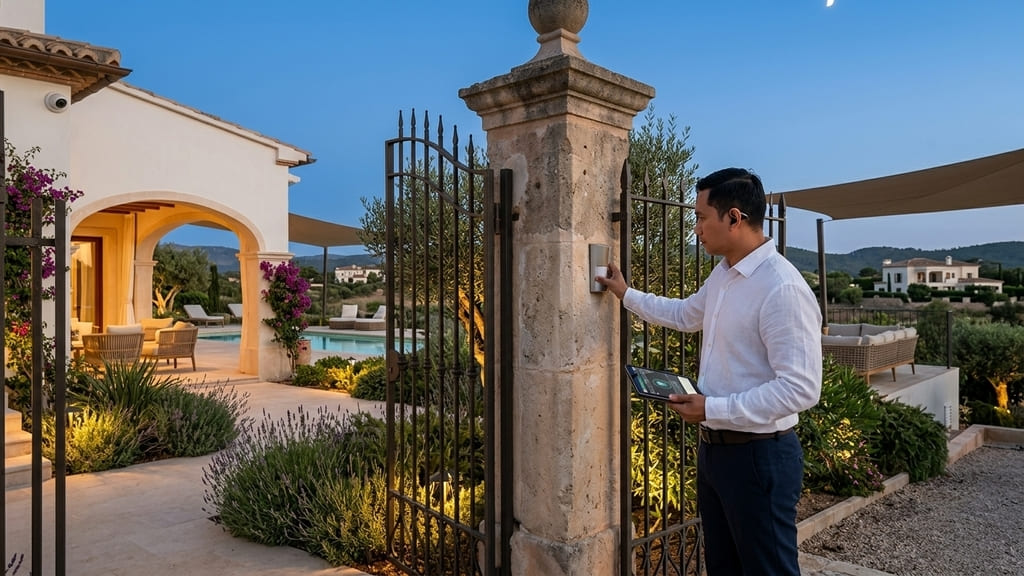
During the summer months, the relocation of high-net-worth families to their second residences—whether coastal villas, rural estates, or exclusive properties in open residential developments—transforms the usual protection dynamics. Unlike primary residences, characterized by armored perimeters and consolidated intrusion systems, summer estates often feature open residential areas, multiple secondary access points, and a constant flow of seasonal staff. In this vulnerable environment, technology alone is insufficient; true strength lies in the seamless operational coordination, discretion, and training of high-level household staff.
The Operational Challenge of Summer Security in High-Value Properties
Summer alters daily routines and introduces risk factors that intruders or unauthorized onlookers often exploit. Vacation properties, by their very architectural nature oriented toward the outdoors, pose unique structural challenges that require constant supervision.
Permeability of Open Residential Areas and Complex Perimeter Zones
Unlike gated communities with a single control checkpoint, many exclusive villas are located in areas with unrestricted movement or in natural surroundings without continuous physical barriers. Lush gardens, direct access to coves, or adjoining lands facilitate blind spots. Household staff become the first line of active observation, trained to detect unusual behavior, suspicious vehicles in the immediate surroundings, or subtle attempts to reconnoiter the estate before any breach occurs.
The Flow of Temporary Staff, Vendors, and External Services
Preparing a summer residence involves a considerable increase in activity: specialized gardening teams, pool maintenance technicians, catering, supply companies, and unexpected mechanical issues. Without a strict protocol for screening and supervision, this continuous transit dilutes the home’s privacy. Ensuring that every external person is identified, credentialed, and accompanied at all times by a trusted staff member is vital to prevent leaks regarding the layout of the home or the family’s habits.
Action Protocols and Access Management for Household Staff
Prevention in physical security does not rely on improvisation, but on the methodical fulfillment of clear procedures that eliminate human error without interfering with the owners’ peace of mind.
Strict Access Control, Credentials, and Visitor Traceability
The estate team must implement rigorous discipline for opening main doors, gates, and entryways:
- Visitor and Vendor Registry: Maintaining a detailed logbook (digital or physical) with names, identity documents, company, reason for visit, and entry and exit times.
- Prior Appointment Verification: Prior confirmation with estate management or the family before authorizing the entry of any unscheduled technician or delivery person.
- Supervision and Internal Escort: Permanent accompaniment of technical personnel in interior or critical areas of the property, restricting access to private areas or bedrooms.
Management of Keys, Master Keys, and Intrusion Systems
A fundamental pillar of security in large estates is the responsible custody of physical and digital accesses:
- Copy Control and Key Traceability: Centralized custody protocols using locked key cabinets, ensuring that no master key leaves the property without explicitly documented authorization.
- Discreet Alarm Handling and Zoning: Precise knowledge of zone activation of the alarm system (night mode, perimeter, or floor-by-floor) by household staff to avoid false alarms or unprotected areas during the day.
- Coordinated Sunset Lockup: A methodical protocol for verifying closures (windows, glass sliding doors, garden gates, and blinds) before sunset or before the family retires to rest.
Strategic Coordination and Communication in Risk Situations
In moments of emergency or facing suspicious incidents, the composure and response speed of the team are decisive elements. The serenity of the family environment depends on staff acting with firmness and stealth.
Operational Link with Private Security Teams and Law Enforcement
A professional household team does not replace security forces, but acts as their best strategic partner on the ground:
- Direct Communication Lines: Establishing fast and discreet channels between the butler or house manager and the monitoring center or close protection team (CPO).
- Emergency Action Protocol: Training to act with cold composure during alarm activations, power outages, or unidentified presences, prioritizing the immediate securing of the family in designated safe zones.
Conclusion
Protecting a second residence during the summer season requires a perfect balance between technical surveillance and a qualified human element. When physical security protocols are integrated with elegance, rigor, and professionalism by staff selected by Luxury Philippines Agency, protection ceases to be a noticeable concern and becomes an invisible guarantee of well-being. Allowing the family to enjoy their vacation with total freedom and absolute peace of mind is, ultimately, the ultimate expression of contemporary luxury service.