
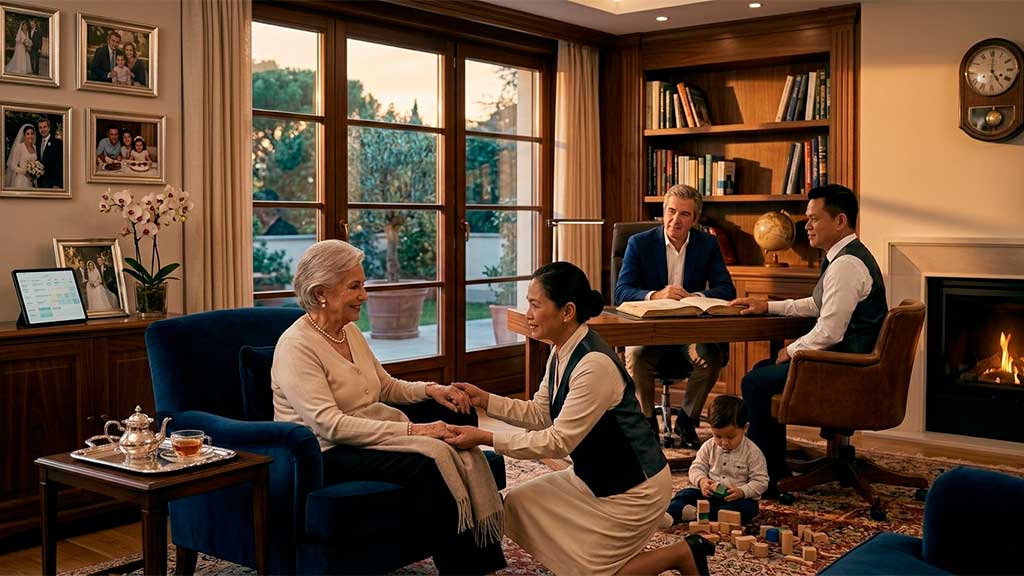
In the ecosystem of a luxury residence, the relationship between owners and domestic staff frequently transcends the boundaries of a standard employment contract. When an employee not only manages a property but also cares for the children, protects the couple’s intimacy, and organizes the most significant moments of family life, the concept of “Extended Family” inevitably arises.
For staff of Filipino origin, this concept is culturally intrinsic. The loyalty and devotion they offer are not mere professional obligations but an extension of their own hierarchy of values. However, in elite service, this affective bond must coexist with impeccable discipline. Finding the perfect balance between genuine affection and rigorous professionalism is the art that defines the best domestic relationships and ensures a harmonious and lasting coexistence.
Filipino culture and the value of loyalty
To understand why Filipino staff integrate so naturally into the family core, it is necessary to understand their cultural roots. Loyalty is not a transaction but a life commitment.
Emotional commitment as a service standard
Unlike other cultures where work ends when the clock is punched, the Filipino professional sees their labor as a mission of care. This emotional dedication creates a unique environment of security for the employer. Knowing that the staff is not only present but also emotionally “invested” in the well-being of the house removes much of the owners’ mental load. It is this investment that transforms an employee into a member of the extended family—someone trusted not only with the keys to the house but with the tranquility of the home.
Gratitude and reciprocity in the home
The concept of Utang na Loob (a debt of gratitude or solidarity) in Filipino culture fosters a relationship of deep loyalty. When a family treats its staff with dignity and generosity, the employee’s response is a dedication that often exceeds expectations. This virtuous cycle of mutual respect is the foundation upon which the concept of extended family is built, allowing the relationship to last for decades, accompanying the family through all its stages.
Maintaining the line: professionalism in intimacy
Even though the affection is real, the long-term success of this relationship depends on maintaining clear professional boundaries. Excessive familiarity can, if not managed well, erode service efficiency.
The importance of boundaries and personal space
Even when staff are considered “like family,” it is crucial to remember that a hierarchical structure exists to protect both parties. Luxury Philippines staff are trained to understand this duality. Affection should never be an excuse for the relaxation of etiquette standards or punctuality. Similarly, the employer must respect the employee’s personal space and rest time, understanding that although they are part of the inner circle of trust, their well-being depends on having a balanced private life.
Absolute discretion: the pillar of trust
One of the greatest risks of closeness is the loss of discretion. A member of the extended family knows the secrets, arguments, and vulnerabilities of the house. Professionalism here manifests as a silent loyalty. Filipino staff are worldwide recognized for their ability to be “silent witnesses”: they are present, they understand, they support, but they never disclose. This discretion is what allows the affection to be safe for the employer.
Clear communication to avoid misunderstandings
In such close relationships, misunderstandings often carry a higher emotional weight. Therefore, it is vital to maintain formal communication channels. Holding regular meetings to review the functioning of the house helps separate personal feelings from operational goals, ensuring that affection does not cloud the objectivity necessary for excellent management.
The impact of the affective bond on household stability
When the balance between affection and rigor is achieved, the benefits for the family are incalculable, translating into stability that money alone cannot buy.
Longevity and continuity of service
Staff turnover is one of the biggest headaches in large residences. However, when an “extended family” bond exists, talent retention is organic. Staff do not look for new opportunities because they feel valued and part of something bigger. For the children of the house, this continuity is vital, as they grow up with stable reference figures who provide emotional security over the years.
Emotional support in times of crisis
The true value of an employee who is “like family” is proven in difficult moments. Whether it is an illness, a bereavement, or a financial crisis, Filipino staff offer support that goes beyond their duties. Their ability to empathize and care selflessly during the family’s low points is what definitively seals the bond. In these situations, professionalism manifests as a solid and comforting presence that keeps the house standing.
The legacy of values and multicultural coexistence
Having someone from another culture as part of the extended family core enriches the worldview of family members, especially the younger ones. Coexistence teaches tolerance, respect for diversity, and humility. At the end of the day, the balance between affection and professionalism not only improves the service but improves the human quality of everyone inhabiting the home.
Conclusion
The concept of “Extended Family” is not a loss of boundaries but an evolution of domestic service toward its highest form: absolute trust. Finding that middle ground where affection feeds loyalty and professionalism guarantees efficiency is the key to success in the world’s most exclusive residences.
At Luxury Philippines Domestic Service, we select profiles that possess the maturity necessary to walk this line. We understand that you are not just looking for someone to work for you, but someone who cares for your home as much as you do. By integrating professionals who understand the value of family, we are ensuring that your house is much more than a managed property; it is a home cared for with the heart and led with the mind.